


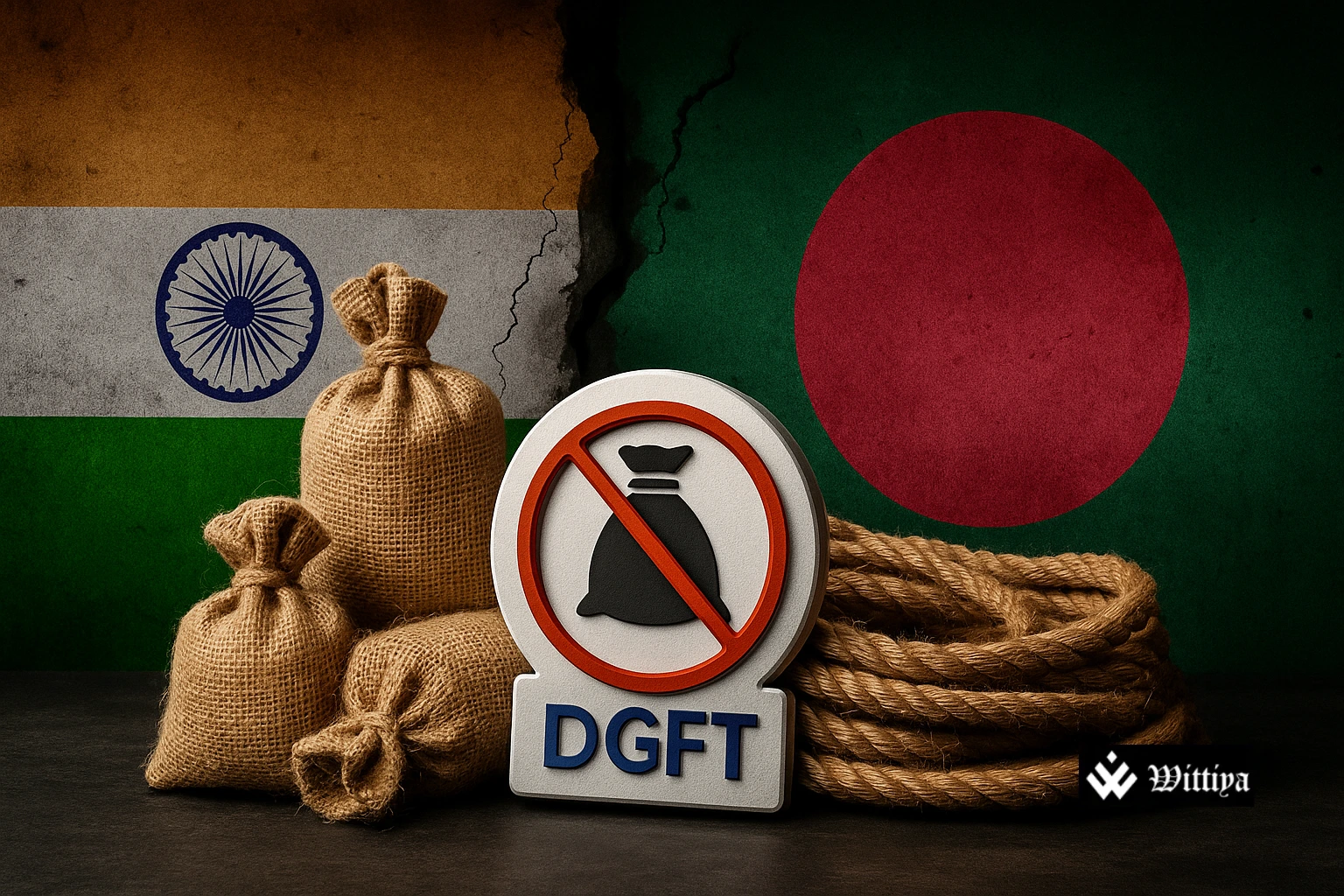
India has banned imports of specific jute products and ropes from Bangladesh via land routes, permitting only shipments through Nhava Sheva Seaport. The move is seen as part of a broader trade recalibration amid strained bilateral relations, impacting textile sector competitiveness.
The Government of India has implemented stringent restrictions on the import of select jute products and ropes from Bangladesh, prohibiting their entry through all land ports along the India-Bangladesh border with immediate effect. Imports of these goods will now be permitted exclusively through the Nhava Sheva Seaport in Maharashtra, as per a notification issued by the Directorate General of Foreign Trade (DGFT).
The notified list of restricted items includes bleached and unbleached woven fabrics made of jute or other bast fibers, twine, cordage, jute ropes, as well as sacks and bags composed of jute material. This regulatory measure follows earlier phased restrictions introduced in April, May, and June 2024, reflecting a calibrated approach to manage trade flows and reinforce domestic manufacturing interests in the textile sector.
Strategic Context and Economic Implications of Import Restrictions
The move must be understood against the backdrop of increasingly complex India-Bangladesh relations marked by political sensitivities and economic competition. Bangladesh represents a significant competitor to India in the textile and jute product markets, sectors vital to the economies of both countries. By restricting land route imports, India is positioning itself to better regulate product quality and origin, curb smuggling risks, and incentivize domestic production.
Economically, the policy shift is poised to have a multifaceted impact. Domestic jute producers are expected to benefit from reduced competition in the Indian market, which may bolster their revenue streams and margins. However, industries dependent on affordable raw jute inputs may face cost pressures and supply chain disruptions in the short term. Market analysts highlight that the restricted flow of Bangladeshi jute products could lead to upward price adjustments in the domestic market, potentially affecting downstream sectors including packaging and agriculture.
Also Read: Indian Exporters Hit Hard as U.S. Retailers Abruptly Halt Orders
Bilateral Trade Dynamics and Economic Impact Analysis
Bilateral trade between India and Bangladesh totaled approximately USD 12.9 billion in the fiscal year 2023-24. India’s exports to Bangladesh accounted for USD 11.46 billion, while imports stood near USD 2 billion, including jute-related goods. The current restrictions are anticipated to recalibrate this trade balance marginally by curbing import volumes from Bangladesh, thereby encouraging import substitution through domestic production or alternate international suppliers.
The selective allowance of jute imports through the Nhava Sheva Seaport demonstrates a strategic emphasis on controlled, transparent trade facilitation. Seaport imports enable enhanced customs scrutiny, compliance verification, and logistics management, mitigating risks associated with unregulated cross-border land trade.
Broader Geopolitical and Sectoral Considerations
These trade restrictions coincide with prior measures, including the suspension of transshipment facilities granted to Bangladesh for exports via India and the imposition of port restrictions on ready-made garments and processed foods from Bangladesh. Collectively, these actions reflect India’s intent to assert greater regulatory control over bilateral trade and address political concerns linked to statements by Bangladeshi political figures and minority rights issues.
India’s jute industry, historically centered in West Bengal and Assam, stands to gain from this protective policy environment. The sector’s capacity for product diversification and value addition will be critical in meeting domestic demand and offsetting potential import shortages. Government support through policy incentives and infrastructure development could accelerate this transition, aligning with broader Make in India initiatives.
READ MORE ON