


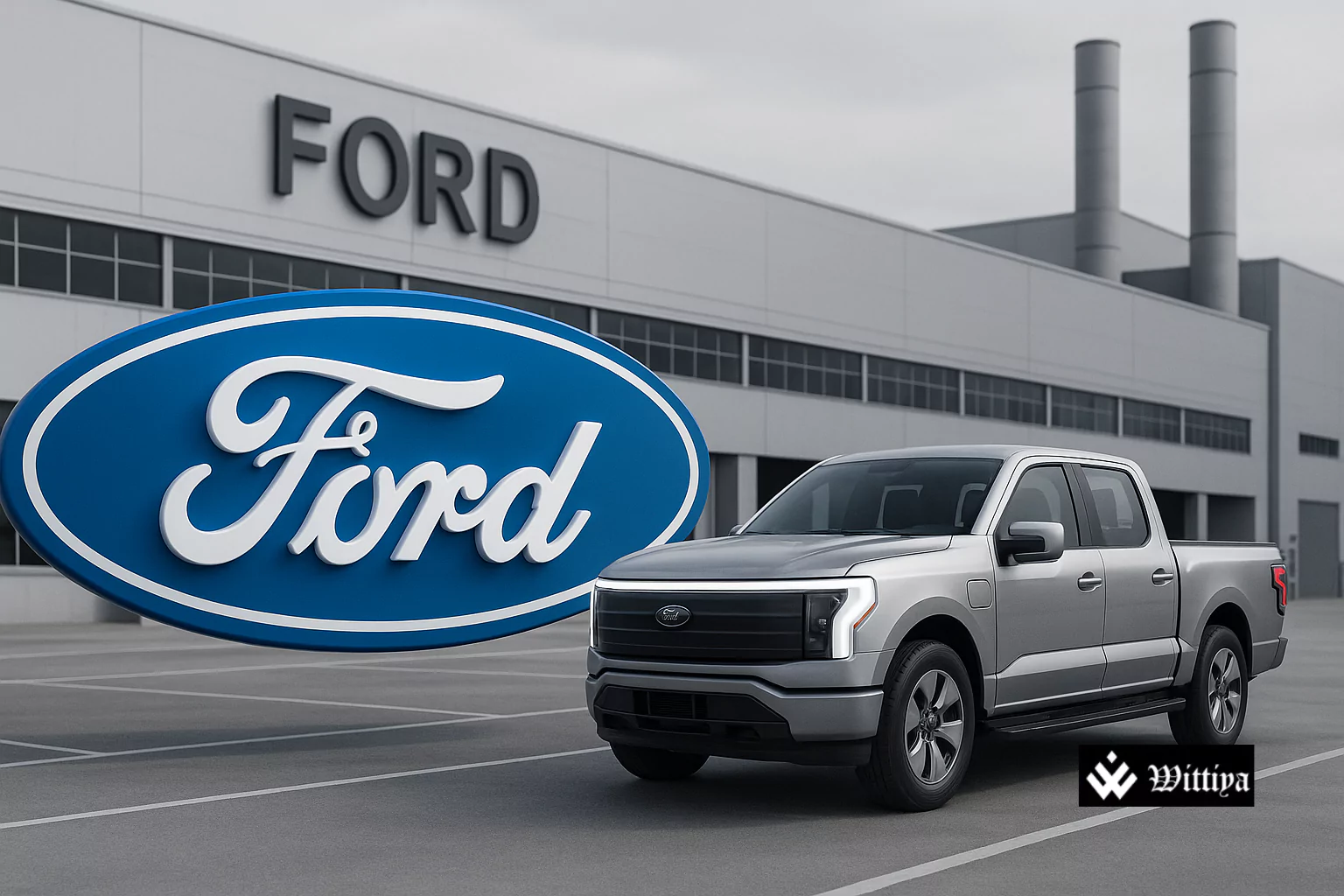
Ford announced a $2 billion investment in its Louisville, USA, assembly plant to produce affordable EVs under its new Universal EV Program, starting with a midsize electric pickup in 2027, aiming to counter global competition and shifting U.S. EV policies.
Ford Motor Company has announced a $2 billion investment in its Louisville, USA, assembly plant as part of its strategy to roll out more affordable electric vehicles (EVs) under the newly launched “Universal EV Program.” This initiative is designed to secure market share in a rapidly evolving global EV sector and strengthen the company’s competitive position against intensifying international rivals.
This investment comes in addition to the $3 billion already allocated for a battery manufacturing facility in Michigan. Together, these projects are expected to create or secure nearly 4,000 jobs. The Louisville facility alone will secure around 2,200 positions, though its transition to EV production will result in approximately 600 fewer jobs compared to its current configuration.
The first model under the Universal EV Program will be a midsize, four-door electric pickup, set for production at the Louisville plant in 2027. The vehicle’s starting price is projected at $30,000, mirroring the historical cost of the iconic Model T when adjusted for inflation.
Also Read: Trump’s 25% Auto Tariff Will Cost U.S. Buyers Billions!
Ford highlighted that lithium iron phosphate (LFP) batteries for this EV line will be assembled domestically, avoiding reliance on imports from overseas suppliers. Analysts note this reflects a broader industry trend among U.S. automakers to localize battery production, reducing supply chain vulnerabilities and aligning with evolving trade and industrial policy frameworks.
Company executives stressed that the decision was driven by the need to respond to rising competition from global EV manufacturers and new technology-driven entrants into the automotive sector. Ford views this as a pivotal moment in its electrification strategy, aiming to combine cost efficiency with strong design, innovation, and performance benchmarks.
Industry experts believe Ford’s entry into the affordable EV segment could influence broader market pricing structures, especially as the U.S. faces an approaching phase-out of federal EV tax credits after September 30. Offering competitively priced, domestically produced electric models may become a key differentiator for sustaining consumer demand and market share.
Since the recession, Ford has added 13,000 jobs across its U.S. operations and remains committed to expanding employment in strategic areas, particularly in EV and battery manufacturing.
READ MORE ON