


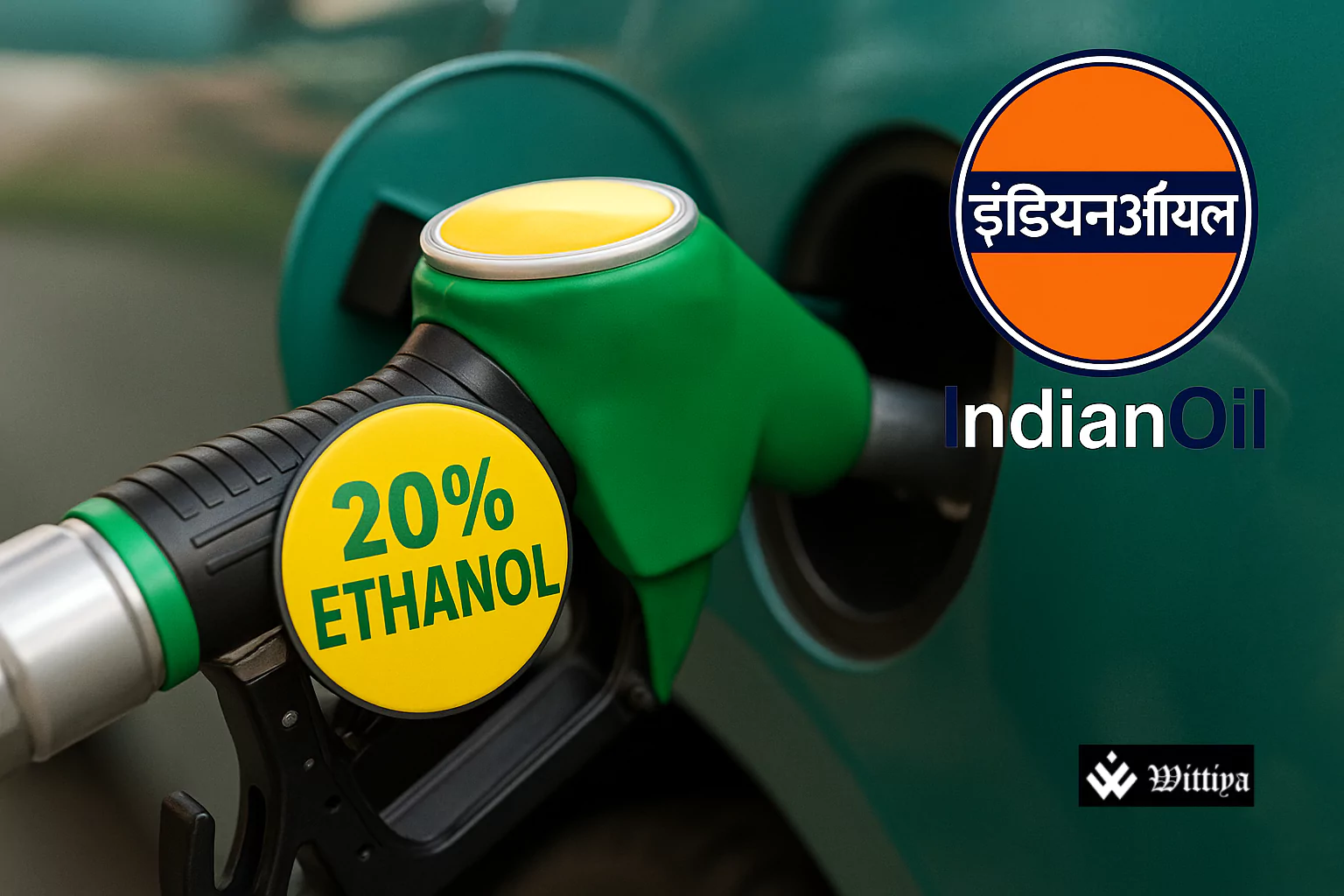
Indian Oil Corporation in India has confirmed that both XP95 premium petrol and normal Motor Spirit in Kolkata now contain 20% ethanol, raising debates over performance, cost, and consumer pricing transparency.
Indian Oil Corporation (IOC) has officially confirmed that petrol sold in Kolkata — including its XP95 premium variant and regular Motor Spirit — contains 20% ethanol by volume. This information, issued on July 3, 2025, follows a public information request submitted in early June.
The confirmation aligns with India’s broader nationwide rollout of E20 petrol, marking a significant leap from the modest ethanol blending levels seen a decade ago. The move is positioned as a step toward energy security, reduced dependence on crude oil imports, and a push for cleaner fuel alternatives.
Also Read: Mileage vs Environment: Are Indian Drivers Paying the Price?
However, the rollout has sparked considerable debate among motorists. Vehicle owners, particularly those with older models not designed for high ethanol content, have expressed concerns over reduced engine efficiency, increased maintenance requirements, and potential damage to components. There is also widespread frustration over retail pricing — despite ethanol’s lower production cost, consumers often pay the same as for pure petrol, and in some regions, even more.
Ethanol-blended fuel costs around ₹61 per litre to produce (including GST), compared to roughly ₹95 per litre for pure petrol in Delhi. Yet, due to the structure of excise duties, state VAT, and existing subsidy frameworks, the price benefit has not been passed on to end-users. This has led experts to question the economic efficiency of the rollout, with some warning that the higher ethanol content could lead to reduced mileage, effectively raising the cost per kilometer for drivers.
Industry analysts note that while the ethanol push supports India’s long-term renewable energy goals, without tax restructuring or targeted price adjustments, public acceptance may remain limited. Balancing environmental ambitions with consumer economics will be crucial to ensuring the success of the E20 transition in India.
READ MORE ON