


India’s largest public sector bank, State Bank of India (SBI), has reported a significant improvement in its asset quality for Q1FY26, driven by a decline in gross and net NPAs and stronger recovery efforts.
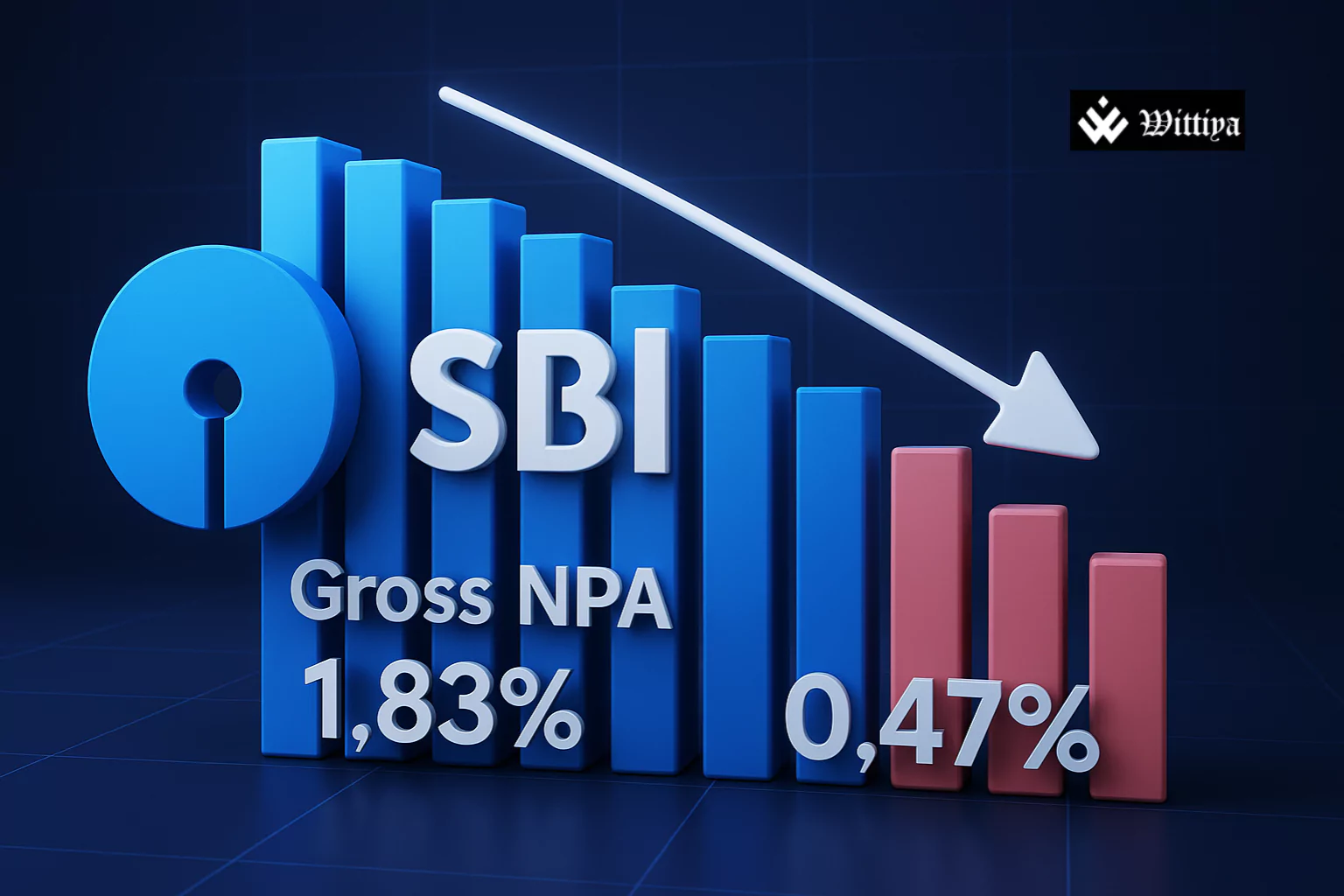
State Bank of India (SBI), the country’s largest lender, has reported marked improvement in asset quality during the first quarter of FY26. The bank’s gross NPA (GNPA) ratio improved to 1.83%, a 38 basis points (bps) year-on-year (YoY) decline, reflecting stronger loan performance and effective risk management.
Simultaneously, net NPA declined 10 bps YoY, settling at 0.47% by the end of the June quarter.
Asset Book Becomes Healthier
The reduction in the bank’s absolute non-performing assets reinforces its credit discipline:
- Gross NPA stood at ₹78,040 crore, down 7.34% YoY
- Net NPA dropped 7.64% YoY to ₹19,908 crore
These figures highlight improved recoveries and reduced slippages in stressed loan accounts.
The slippage ratio, a key metric of asset stress, fell 9 bps YoY to 0.75%, indicating SBI’s proactive monitoring of loan portfolios and better underwriting practices.
Also Read: What Happens When NSE, SBI, and HDFC Bank Sell NSDL Stakes?
Coverage and Capital Strength
SBI’s provision coverage ratio (PCR) now stands at 74.49%, reinforcing the bank’s ability to absorb potential credit losses. This higher provisioning coverage suggests a robust buffer against future asset deterioration and aligns with best-in-class capital protection norms.
Additionally, the bank’s continued focus on retail asset quality, especially in segments such as personal loans and home finance, is contributing to lower incremental stress formation.
CASA Ratio Sees Marginal Dip
On the liability side, the Current Account Savings Account (CASA) ratio slipped 134 bps YoY to 39.36%, reflecting a shift in depositors’ preferences amid a tightening interest rate environment. Though still healthy, the dip in CASA may put moderate pressure on funding costs going forward.
SBI’s improved NPA metrics and strong PCR indicate a maturing balance sheet backed by conservative risk practices and consistent asset recovery efforts. The steady fall in gross and net NPAs quarter after quarter reflects the bank’s discipline in credit underwriting and collections.
However, the drop in CASA ratio will require attention as deposit mobilization strategies evolve in response to market competition. Nevertheless, the bank’s overall asset quality trends remain structurally positive, pointing toward sustained performance in the upcoming quarters.
READ MORE ON