


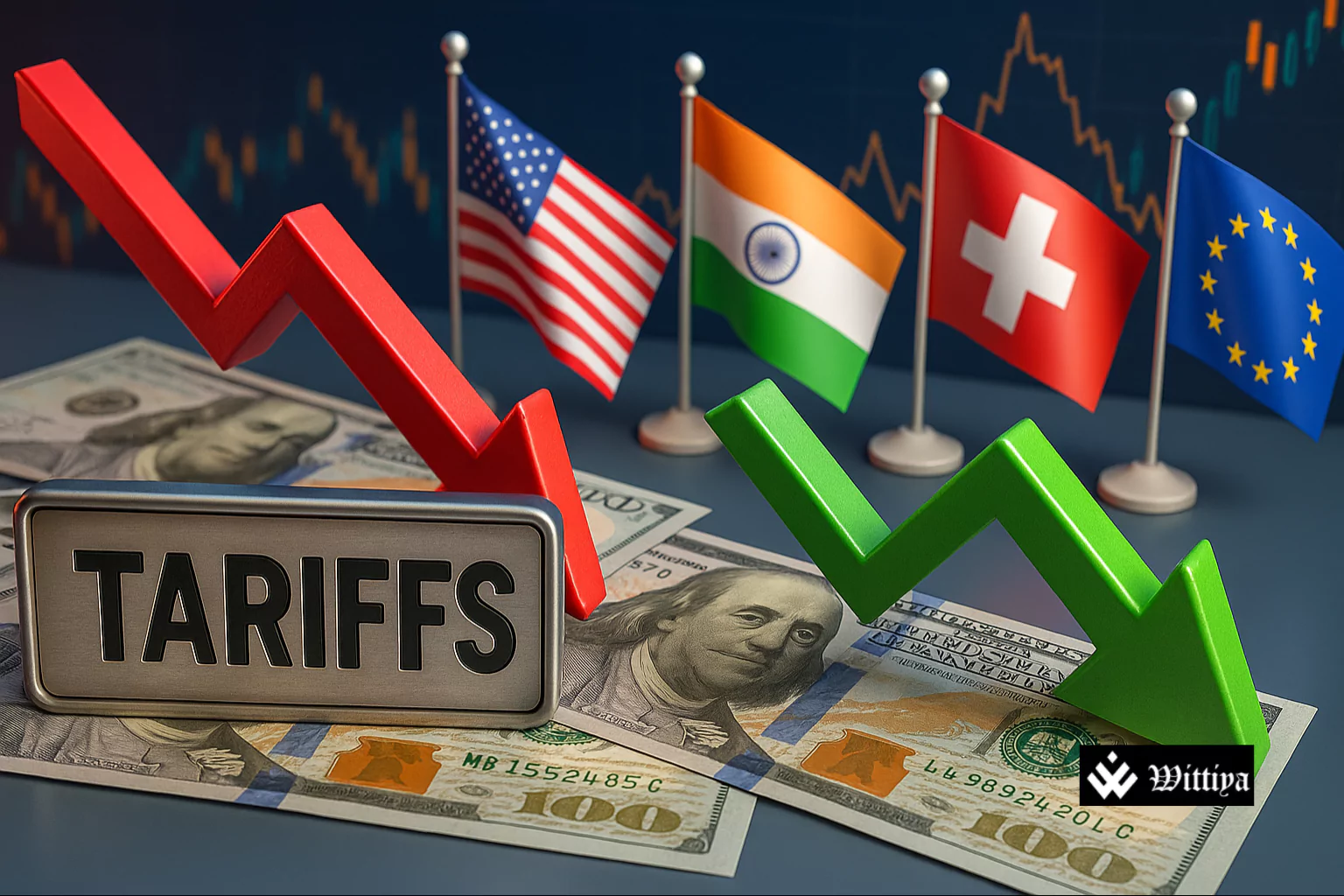
U.S. President Donald Trump’s sweeping tariffs take effect, impacting trade with over 60 countries. Economists warn of a slowdown as key indicators point to rising inflation and stalled hiring. Nations like India and Switzerland express concerns over disrupted exports, while the U.S. stock market remains resilient.
As President Donald Trump’s sweeping new import taxes went into effect Thursday, concerns are mounting over how these broad tariffs could undermine the already fragile U.S. economy.
Goods from over 60 countries are now subject to tariffs ranging from 10% to 100%. Among them, the European Union, Japan, and South Korea face 15% duties, while Taiwan, Vietnam, and Bangladesh are taxed at 20%. India faces an unprecedented 50% rate, following penalties over oil trade with Russia. Swiss goods, including pharmaceuticals and electronics, are now subject to a 39% tariff.
The Trump administration has framed these tariffs as a long-term rebalancing strategy to bring manufacturing back to U.S. soil. But early signs suggest the move could pose significant risks to domestic economic growth, wage stability, and consumer demand.
U.S. Economic Signals Flash Warning
In the months leading up to these measures, key indicators have started to soften. Hiring in industrial sectors has slowed. Inflationary pressures are building, particularly for imported goods. Residential real estate markets in key regions have begun to cool. And despite record-high tariff collections claimed by Trump, experts argue the revenue comes at the cost of reduced business productivity. “A less productive economy requires fewer workers,” says experts. “And with higher prices, real wages decline. The long-term outcome is stagnation.”
This sentiment is echoed across multiple sectors. Higher input costs could push manufacturers to cut back operations, delaying investment plans or even freezing hiring altogether. For U.S. consumers, that means thinner wallets and pricier everyday goods.
Also Read: Indian Exporters Hit Hard as U.S. Retailers Abruptly Halt Orders
Manufacturing at Risk: A Costly Rebalancing Act
While Trump insists these tariffs will spark an industrial renaissance, the reality for many U.S. manufacturers is more complicated. The global supply chain remains deeply interlinked. Tariffs on semiconductors, for example, have already raised costs for American electronics and auto firms.
Construction spending has also declined 2.9% year-over-year, a sign that capital investment — a key driver of long-term economic growth — may be stalling. The higher cost of imported raw materials plays a role in this slowdown.
Importers, aware of the looming hikes, had front-loaded their shipments in earlier months. This temporarily inflated trade volumes, but the underlying U.S. trade deficit still ballooned 38% higher in the first half of 2025 compared to 2024 — undermining the very purpose of the tariff regime.
Stock Market Resilient — For Now
Despite economic headwinds, equity markets have remained strong. The S&P 500 has rallied more than 25% from its April low, buoyed by July’s tax cuts and investor optimism. But experts caution against reading too much into these gains. “Markets may seem numb to tariff news, but the real economic effects will play out over time,” warned one financial strategist.
Wall Street may be bullish for now, but Main Street is bracing for uncertainty. Small businesses that rely on imported goods are already feeling the squeeze. Retailers may be forced to pass price hikes onto consumers just as household purchasing power declines.
Legal Clouds and Political Stakes
Trump’s decision to impose tariffs under a rarely used 1977 economic emergency law is now under legal challenge. Critics argue this sets a dangerous precedent, allowing tariffs to be wielded as political tools without congressional oversight.
Even some within the president’s own party have voiced concern over the unpredictability of the policy direction, warning it could chill investment and send mixed signals to global trade partners.
Still, the White House remains confident. With the president forecasting an “unprecedented” economic boom, the administration believes the short-term pain will lead to long-term gains.
Conclusion: U.S. Market Faces a Pivotal Moment
As the latest round of tariffs take hold, the U.S. economy stands at a crossroads. The gamble: that higher import taxes will ultimately reignite domestic manufacturing and create high-wage jobs. The risk: that the rising cost of goods, sluggish hiring, and weakening consumer demand may set the stage for a broader market downturn.
The coming months will be crucial in revealing whether the U.S. can weather this self-inflicted storm — or whether Trump’s tariff push will become a case study in economic overreach.
READ MORE ON