


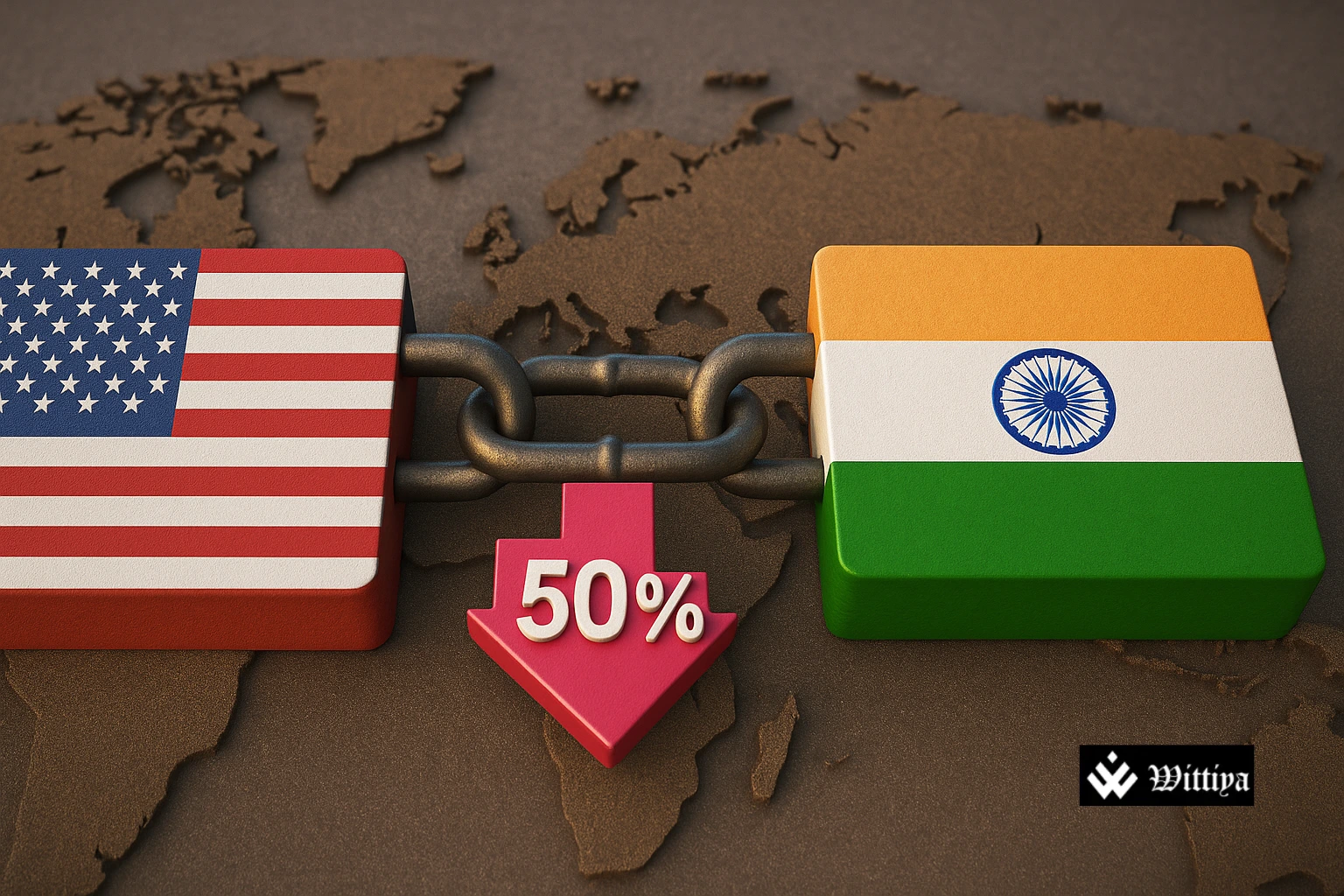
India faces heightened economic pressure as the United States signals potential secondary sanctions after implementing a 50% import tariff on Indian goods. The development, tied to India’s energy trade with Russia, signals a broader shift in U.S. trade and foreign policy dynamics.
U.S. President Donald Trump has heightened trade tensions with India, imposing a 50% tariff on Indian imports and issuing a fresh warning on secondary sanctions, citing India’s continued purchase of Russian oil. The decision marks a significant shift in U.S. trade posture and has triggered diplomatic and economic concerns in India.
Additional Tariff: Strategic Penalty or Trade Weapon?
The newly imposed 25% additional tariff—on top of pre-existing U.S. duties—will come into force 21 days after August 7, raising total duties on select Indian exports to as high as 50%, one of the highest across U.S. trading partners. The rationale cited: India’s growing energy ties with Russia, which Washington says indirectly sustains Moscow’s geopolitical ambitions.
| Tariff Timeline | Details |
| August 7 | Trump announces 25% additional tariff |
| August 27 (effective date) | Total duties on some goods reach 50% |
| Next Steps | Possible sector-specific sanctions on India |
Secondary Sanctions: A Policy Lever in Motion?
It’s only been 8 hours… you’re going to see a lot more secondary sanctions.”
President Trump
Though India was not exclusively named, the undertone strongly pointed toward a policy path targeting countries deepening energy cooperation with Russia. Trump also mentioned China as a possible candidate for future sanctions, further signaling a potentially multilateral enforcement strategy.
Also Read: India-US Trade Strains Deepen Amid 50% Tariff Escalation
India’s Response: Strong Diplomatic Pushback
India’s Ministry of External Affairs (MEA) issued a sharp response, condemning the tariff escalation and the secondary sanctions rhetoric. The ministry noted:
“It is extremely unfortunate that the U.S. should choose to impose additional tariffs on India for actions that several other countries are also taking in their own national interest.”
India reaffirmed that energy security for its 1.4 billion citizens remains a sovereign economic decision driven by market needs.
| India’s Key Reaction Points | Remarks |
| Condemnation of tariff hike | Called it “unfair, unjustified, and unreasonable” |
| National energy policy defense | Asserted energy imports serve economic stability and security |
| Warning of countermeasures | “Will take all necessary actions to protect national interests” |
Global Implications: Risk of Trade Realignments
Experts suggest that these moves could reshape trade dynamics between India and the United States, particularly in sectors such as pharmaceuticals, software services, automotive components, and defense. With geopolitical alignment growing complex, India may accelerate trade diversification efforts, deepening ties with Asia-Pacific, Middle Eastern, and European partners.
India’s foreign trade strategy might also explore increased bilateral deals and currency settlement arrangements to bypass potential sanction risks in the energy trade.
READ MORE ON