


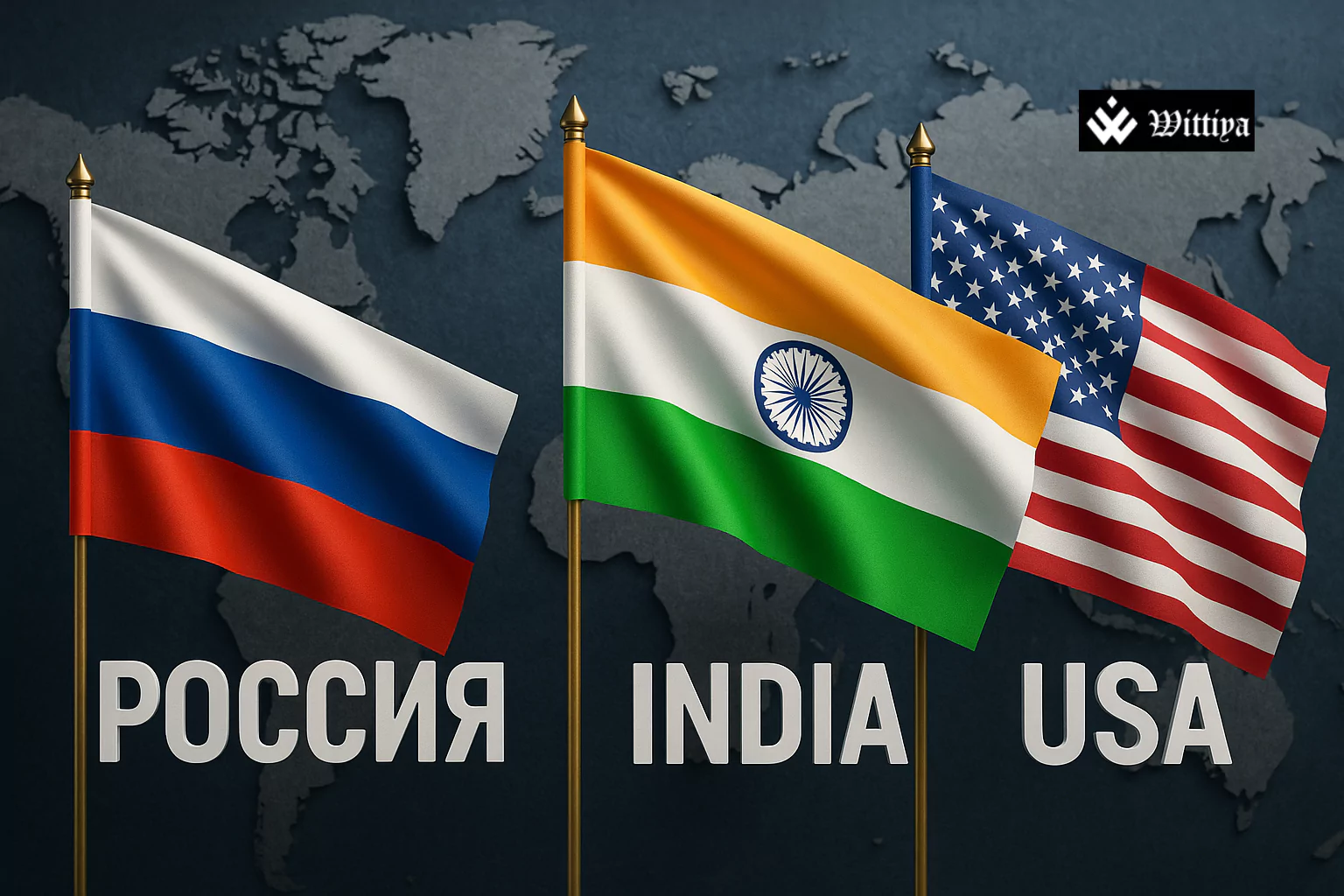
Russia has accused the United States of pursuing a “neocolonial agenda” through tariff impositions, following tariff threats by Donald Trump against India for its oil trade with Russia. India, in response, defended its energy strategy and trade interests, citing unfair targeting.
As global tariff tensions escalate, Russia has strongly condemned the United States for adopting a “neocolonial agenda,” following recent threats by former President Donald Trump to impose higher tariffs on India. The statements come amid growing global economic realignments and rising protectionism.
Russia’s Foreign Ministry criticized the United States for shifting from its historical advocacy of free trade to a strategy built on economic coercion. The remarks, shared through official diplomatic channels, labeled the U.S. tariff hikes as politically motivated attempts to preserve global dominance.
Unable to accept the erosion of its dominance in an emerging multipolar international order, Washington continues to pursue a neocolonial agenda.”
The Russian Government
The statement referenced the United States’ imposition of tariffs on 68 countries, including allies, as well as the European Union. These measures, set to take effect on August 7, range from 10% to 41%, targeting strategic imports such as raw materials, energy products, and critical technology components.
Also Read: Trump’s Trade War: A Self-Inflicted Wound on the US Economy?
In a firm rebuttal to Trump’s remarks about India profiting from oil trade with Russia, the Ministry of External Affairs, India official website clarified the country’s position, stating that oil imports from Russia were in response to redirected global supply flows and were necessary to ensure domestic affordability. It added that India’s trade with Russia is significantly lower than that of Western countries, both in volume and scope.
Targeting India is unjustified and unreasonable. Like any major economy, India will take all necessary steps to protect its national interests and economic security.”
the Russian Government
Economic data released by India highlighted that European LNG imports from Russia reached 16.5 million tonnes in 2024, a record high, surpassing their own previous levels from 2022. Furthermore, Western economies continued importing strategic materials and energy components from Russia, contradicting their own sanctions rhetoric.
From a global economic standpoint, Russia warned that the widespread tariff regime threatens to fragment the international economic system further, disrupt cross-border supply chains, and stall recovery in developing regions.
The Russian administration reaffirmed its commitment to building alliances with BRICS and other like-minded nations to counter unilateral sanctions and economic pressure. It proposed deeper cooperation on trade resilience and monetary independence.
This geopolitical standoff reflects a broader shift in global economic alliances. With India asserting its strategic autonomy and Russia amplifying its diplomatic support, the developing world continues to push back against what many perceive as western economic overreach.
As India prepares for potential retaliatory measures, financial analysts suggest that new multilateral trade corridors and digital payment infrastructure could further reduce dependence on the traditional Western-led economic system.
READ MORE ON