


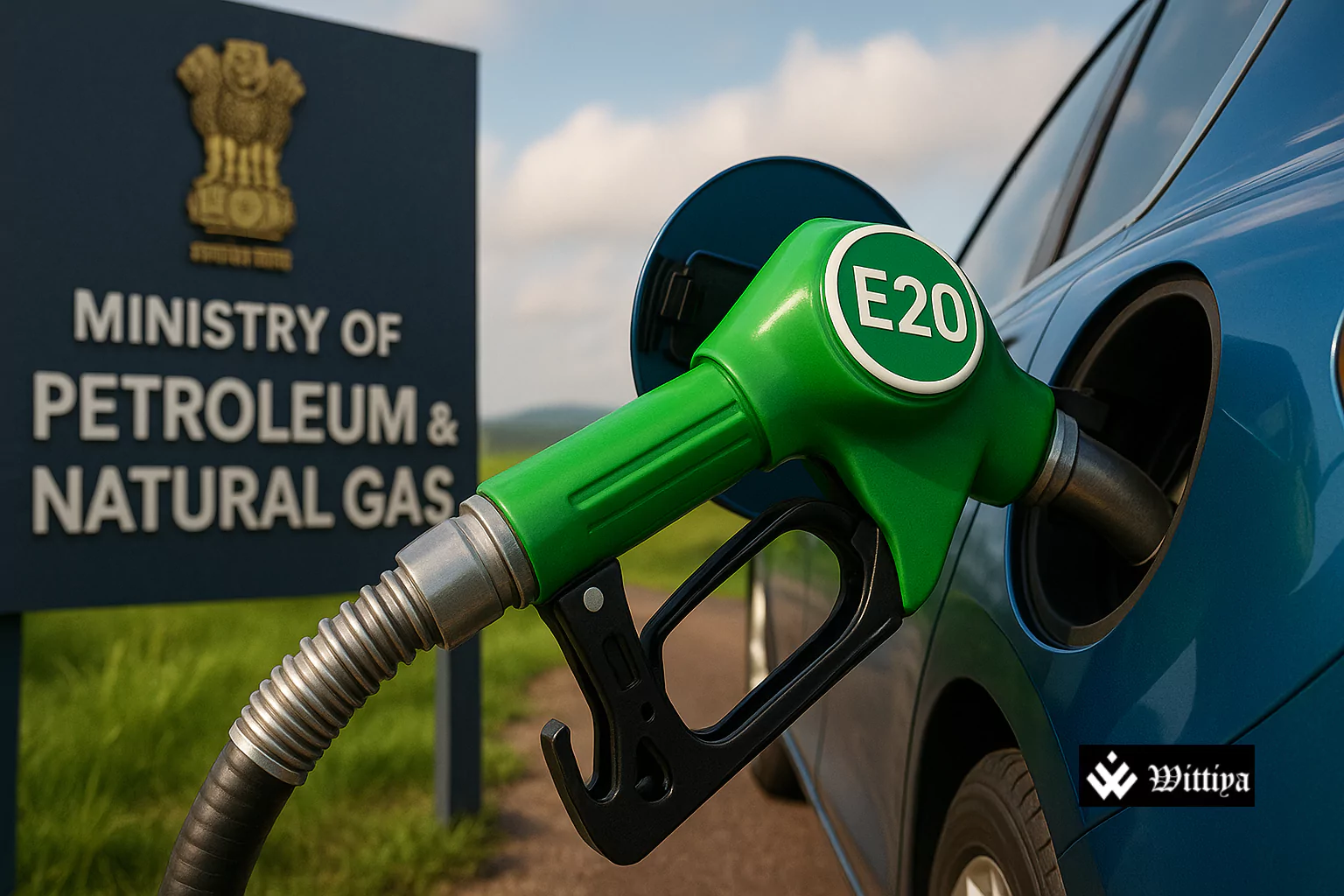
India’s Ministry of Petroleum and Natural Gas has addressed online claims about E20 petrol’s impact on vehicle mileage and engine health. It confirmed only a marginal mileage drop and highlighted ethanol’s long-term benefits for sustainability and energy security.
India’s Ministry of Petroleum and Natural Gas has responded to growing speculation across online platforms regarding the potential negative impact of E20 petrol—a blend of 20% ethanol and 80% petrol—on vehicle performance. The ministry has clarified that contrary to claims of significant mileage reduction or engine damage, the real-world impact is scientifically minimal.
Vehicles designed for E10 petrol but retrofitted for E20 may experience a marginal mileage drop of 1–2%, while others may see a reduction of around 3–6%. However, proper engine tuning and E20-compliant parts can help minimize these effects. Since April 2023, E20-compatible vehicles with upgraded components have been made available, ensuring compatibility with the fuel blend and optimizing performance.
The government also addressed concerns related to fuel tank corrosion, noting that while some older vehicles may require minor component replacements—such as rubber seals or gaskets—after 20,000 to 30,000 kilometers, these are inexpensive and typically handled during routine servicing.
Also Read: India’s Green Fuel Shift Sparks Questions on Insurance Premiums
More importantly, ethanol brings tangible benefits. As a renewable fuel, ethanol emits 50–65% less greenhouse gases than conventional petrol. The introduction of E20 petrol plays a pivotal role in India’s strategy to lower its carbon footprint and improve energy security by reducing dependence on crude oil imports. Ethanol is domestically produced using sugarcane, maize, surplus rice, and agricultural waste—resources that also support the rural economy.
From a financial standpoint, India has saved over ₹1.4 lakh crore (approximately USD 16.8 billion) in foreign exchange due to ethanol substitution since 2014–15. Additionally, over ₹1.2 lakh crore (around USD 14.4 billion) has been paid to farmers, reinforcing the sector’s contribution to the national economy.
By promoting ethanol blending, the government is not only moving toward its sustainability targets but also stimulating rural growth, reducing import bills, and creating a more resilient fuel economy. The ministry reiterated that claims of drastic fuel efficiency losses are not supported by data and should not overshadow the broader environmental and economic benefits of E20 implementation.
READ MORE ON