


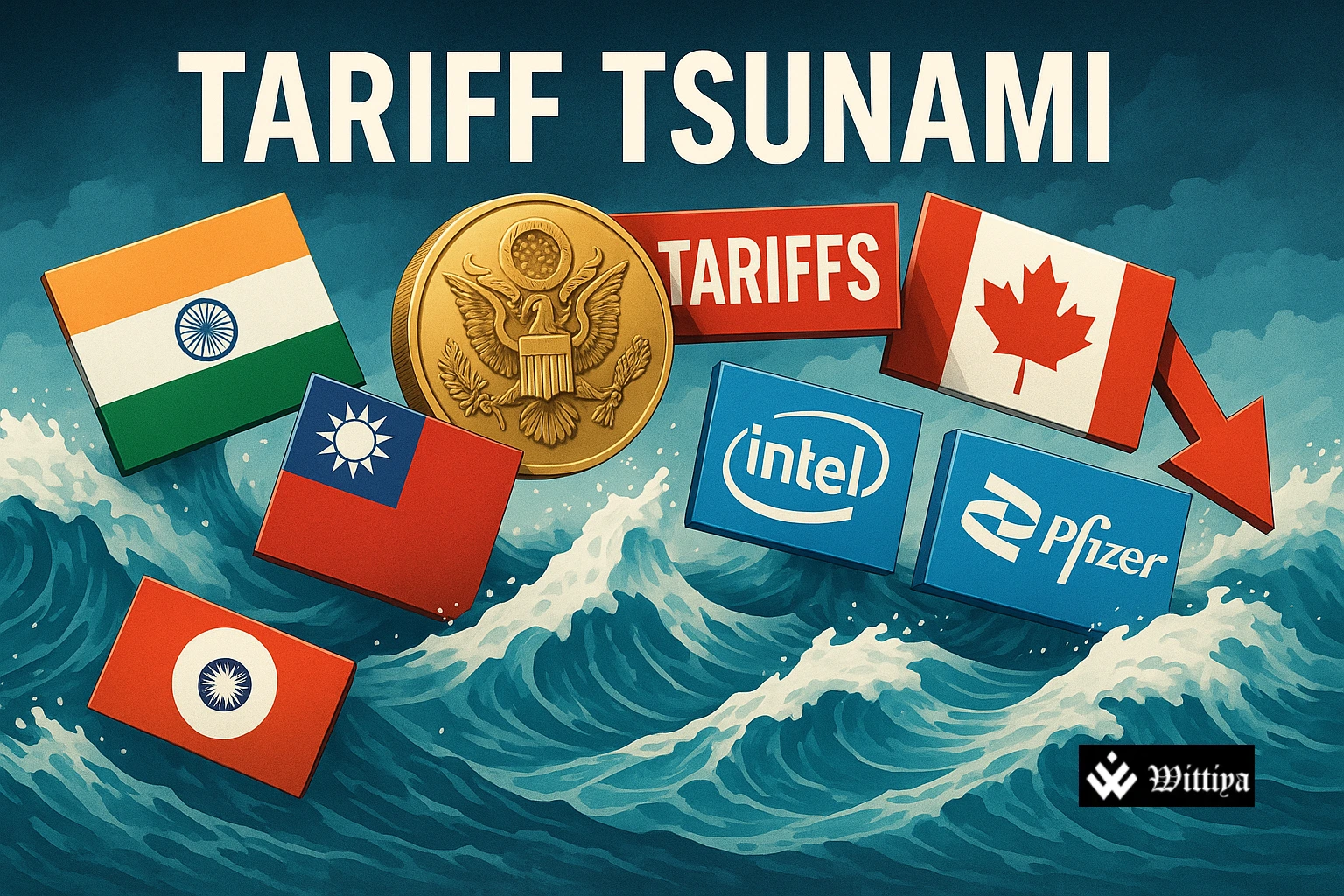
More than 60 countries are rushing to renegotiate trade terms with the United States after President Donald Trump imposed sweeping new tariff rates ranging from 10% to 50%. The sudden policy shift has triggered market selloffs, raised inflation concerns in the U.S., and rattled governments and exporters worldwide.
The United States has thrown global trade into disarray by imposing a new wave of tariffs—some reaching as high as 50%—on imports from over 60 countries. This sweeping move by President Donald Trump has prompted urgent responses from trading partners, who are now scrambling to secure revised agreements to protect their economies.
The revised rates, signed into effect via executive order, are now scheduled to take hold on August 8, 2025, after a brief White House reprieve delayed implementation by one week. The updated schedule provides limited breathing room for negotiations, though many countries remain exposed to immediate economic disruption.
Tariff Breakdown: Major Economies Caught in Crosshairs
The newly imposed tariffs vary significantly by country and commodity. India, a key U.S. trading partner, faces a 25% rate on outbound exports to the U.S., while Taiwan faces a 20% duty, affecting its critical electronics and semiconductor sectors. South Africa has been hit with a 30% levy, prompting immediate diplomatic engagement.
Switzerland, which sends over half of its exports to the U.S. in the form of pharmaceuticals, has been struck with one of the highest rates—39%. The Swiss franc slipped to a six-week low following the announcement, and its government acknowledged that no agreement had been reached after last-minute talks with President Trump.
Canada’s tariff rate has been raised from 25% to 35%, with the White House citing national security concerns and policy disagreements. Canadian officials expressed strong disappointment and have committed to seeking immediate diplomatic resolution.
Market Fallout and Investor Reaction
The global equity markets reacted swiftly. Europe’s Stoxx 600 declined nearly 2%, the FTSE 100 slipped 0.8%, and U.S. indices followed suit. The Dow Jones Industrial Average, S&P 500, and Nasdaq all posted losses, exacerbated by disappointing domestic employment data released earlier the same day.
Currency markets also reflected heightened volatility, with the Swiss franc and Canadian dollar among the worst performers. The dollar index climbed modestly, as investors sought safe-haven assets amid policy uncertainty.
Vulnerable Nations and Tariff Disparity
Some of the hardest-hit countries include Syria (41%), Laos (40%), Myanmar (40%), Libya (30%), Iraq (35%), and Sri Lanka (20%). The steep tariffs have raised fears of economic contraction in already fragile regions.
Lesotho, which had initially been targeted with a 50% tariff, secured a lower 15% rate, following intense lobbying and public outcry. The textile-dependent economy declared a state of disaster after the initial announcement, underscoring the vulnerability of smaller economies to U.S. trade policy.
Pharmaceuticals Under Pressure as Pricing Demands Escalate
Though pharmaceuticals were not explicitly listed in the updated executive order, the White House confirmed a 15% rate on Monday, following a private deal reached during meetings with EU representatives.
The pharmaceutical sector, a target of criticism over drug pricing, remains under review. The U.S. government has warned industry leaders to reduce costs to American consumers or face “all available federal measures” in the coming quarters.
Also Read: Made in India, Taxed in America: Which Indian Sectors Will Bleed the Most?
Geopolitical Repercussions and Strategic Gaps
Moldova (25%), Serbia (35%), and Bosnia and Herzegovina (30%), all aspiring EU members, were blindsided by the tariffs, adding tension to the bloc’s trade and expansion strategy. The European Union, meanwhile, received a blended 15% rate, with auto tariffs excluded for now, though they remain subject to an elevated 27.5% tax.
While many nations reeled from sharp new levies, the United Kingdom and Falkland Islands received 10% rates, the lowest among affected countries. These nations were among the first to finalize deals with the Trump administration, illustrating the benefit of early bilateral alignment.
Short-Term Relief, Long-Term Trade Recalibration
Goods already in transit or warehoused before August 8 will temporarily be shielded under prior rates until October 5, 2025. However, exporters and freight carriers are racing against time to process pending shipments before the full tariffs apply.
Trade economists warn that these tariffs may significantly realign global supply chains over time.
Policy Outlook: Inflation, Fed Pressure, and Economic Risk
Experts caution that the new tariffs, especially on consumer goods and raw materials, could feed into U.S. inflation, which the Federal Reserve is actively monitoring. With consumer sentiment already weakening and job creation slowing, these trade measures risk compounding economic headwinds.
The U.S. Department of Commerce has not yet clarified whether further exemptions will be offered to strategic allies or defense partners, adding another layer of uncertainty for multinational corporations and bilateral partners alike.
Conclusion:
As the U.S. unleashes a new phase of aggressive tariff policy, the global economy faces renewed instability. While some nations scramble for reprieve, others brace for long-term structural damage. Market participants, governments, and exporters must now navigate a radically altered trade landscape shaped by geopolitics, inflation risk, and the reassertion of protectionist doctrine in U.S. economic policy.
READ MORE ON