


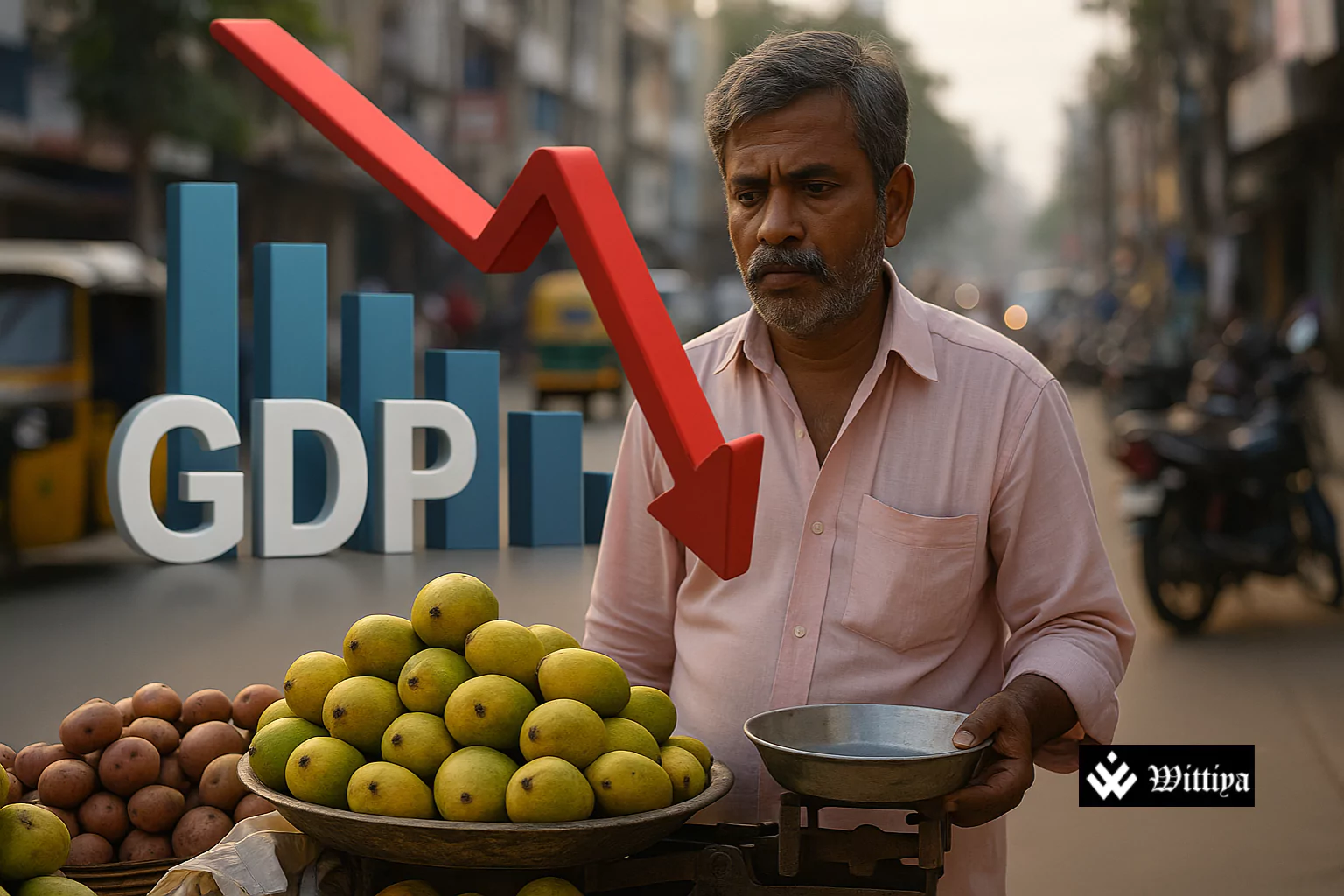
India may experience a 20–30 basis point slowdown in its GDP growth rate due to recently imposed 25% tariffs by the United States. Despite this, domestic consumption is expected to act as a buffer, keeping India among the fastest-growing major economies globally.
India’s economic outlook faces fresh pressure as the United States has imposed a 25% tariff on a wide range of Indian exports. Analysts indicate this development could push India’s GDP growth to its lowest point in five years, with forecasts estimating a 20 to 30 basis point decline for FY26.
Although the tariffs are expected to create short-term disruptions in export-driven sectors, India is projected to maintain its position as one of the fastest-growing major economies globally, thanks to robust domestic consumption. Analysts across leading financial institutions estimate varying impacts — some seeing a mild dent of 20 basis points, while others expect a deeper 30 basis point slowdown.
“The net impact of these tariffs is expected to shave off a fractional but noticeable part of GDP. However, the domestic economy remains strong, and consumer spending is expected to cushion the shock,” said a senior economist tracking emerging markets.
Also Read: Made in India, Taxed in America: Which Indian Sectors Will Bleed the Most?
Trade Friction Meets Resilient Fundamentals
The latest tariffs target key Indian export segments, which have seen rising traction in global markets over the past two years. With global supply chains already facing volatility, the US move adds another layer of risk to India’s external trade outlook.
However, India’s economic fundamentals remain intact. The country continues to benefit from a growing middle class, stable inflation, increased rural consumption, and a favorable monsoon — all of which support internal demand and offset trade-side risks.
Also Read: List of Indian Stocks Most Impacted by U.S. Tariffs
GDP May Hit Five-Year Low, But Relative Performance Strong
If the full 30 basis point impact materializes, India’s GDP growth for FY26 could dip to approximately 6.5% — its lowest since FY21. Nonetheless, this level remains enviable compared to most global economies struggling with inflationary pressures and stagnant demand.
India’s trade strategy now appears to be pivoting toward diversification, with increased emphasis on new markets in Asia, Africa, and Europe to reduce dependence on US-bound exports.
READ MORE ON