


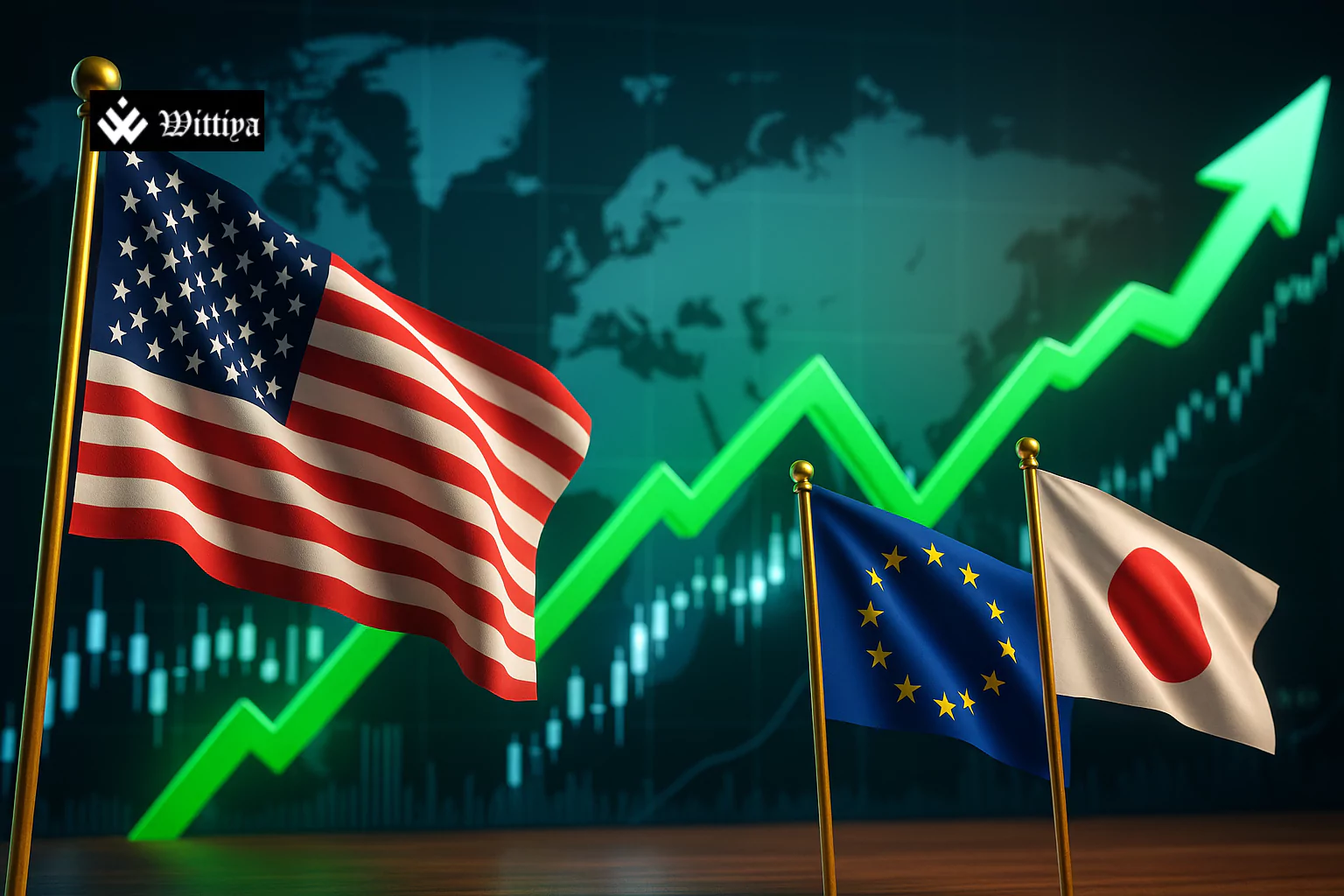
Global stock markets surged to record levels following the United States’ trade agreement with Japan and signals of further accords, including potential tariff alignment with the European Union.
Global equities soared to new record highs as optimism mounted over the United States’ momentum in striking new trade agreements, just a day after securing a trade pact with Japan. The relief rally lifted a global index of stocks by over 1%, supported by a robust performance across Asian markets, particularly Japan, where financial sector gains fueled a 2% jump in benchmarks.
Investors gained further confidence from reports suggesting the United States is nearing a trade agreement with the European Union that would establish a unified 15% tariff on most products. If finalized, this would follow the structure of the US-Japan deal, signaling a shift towards more coordinated trade strategies and reduced volatility in cross-border commerce.
Alphabet Inc. boosted sentiment in the tech sector after a solid earnings report lifted Nasdaq 100 futures, while Tesla Inc. traded lower in after-hours due to a conservative forward outlook. The mixed reaction to earnings, however, did little to dent the broader bullish narrative driven by improving trade signals.
The bond market reflected a risk-on sentiment as US Treasuries dipped modestly. Meanwhile, the US dollar index extended its retreat for the fifth consecutive day amid internal tensions surrounding the Federal Reserve’s leadership, though policy continuity is expected in the short term.
European stocks mirrored the global surge, with futures gaining 1.3% on the heels of progress in US-EU negotiations. The European Central Bank is expected to hold interest rates steady for the first time in over a year, aligning with broader global central banks adopting a wait-and-watch stance amid shifting trade dynamics.
Also Read: Biggest Trade Deal Ever: US, Japan Agree on $550 Billion Pact
Analysts noted that the trade agreement with Japan and the potential 15% unified tariff structure with the EU provide critical assurance to global investors that worst-case trade disruption scenarios may not materialize. The developments also signal that Washington may prioritize economic pragmatism in bilateral discussions ahead of key tariff expiration deadlines.
The broader implication is that with trade friction easing, corporate earnings will be less vulnerable to tariff shocks, enabling equity valuations to remain elevated. Markets will now closely watch the scheduled US-China trade discussions in Stockholm next week, which may offer further direction.
As the US explores similar deal structures with other economies—including a proposed investment-linked arrangement with South Korea—global investors are recalibrating portfolios to reflect a more constructive outlook on global trade flows and economic growth.
READ MORE ON