


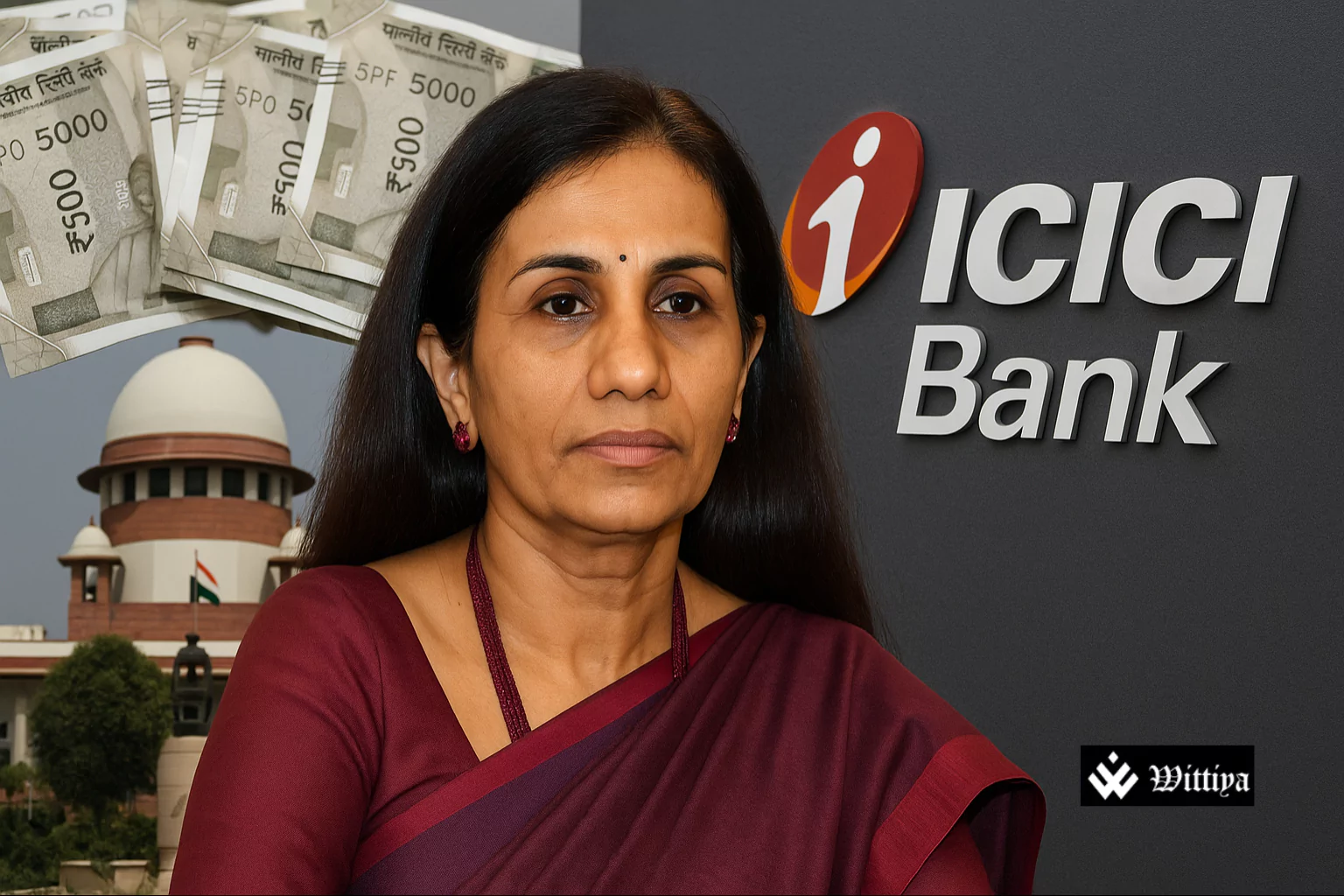
In India, former ICICI Bank CEO Chanda Kochhar has been found guilty of accepting a ₹64 crore bribe related to a ₹300 crore loan disbursed to Videocon Group. A tribunal upheld the Enforcement Directorate’s findings, citing a clear quid pro quo involving her husband and conflict of interest breaches.
In a significant development from India’s financial sector, ICICI Bank’s former Managing Director and Chief Executive Officer, Chanda Kochhar, has been found guilty by an appellate tribunal for her role in a ₹300 crore loan extended to the Videocon Group, which allegedly involved a ₹64 crore bribe.
The tribunal’s judgment, dated July 3, comes as a strong validation of the findings presented by the Enforcement Directorate. The order details how Kochhar sanctioned the high-value loan while failing to disclose a material conflict of interest—one that directly involved her husband and a web of companies linked to the borrowing entity.
The tribunal observed that the disbursal of funds by ICICI Bank to Videocon was swiftly followed by a transfer of ₹64 crore from Videocon’s group company to NuPower Renewables Pvt Ltd (NRPL)—an entity controlled by Kochhar’s husband. The sequence, timing, and money trail presented by the enforcement body demonstrated what the tribunal concluded to be a “clear quid pro quo.”
In its ruling, the tribunal cited strong documentary evidence including transaction logs, ownership patterns, and authoritative statements under Section 50 of the Prevention of Money Laundering Act (PMLA). It stated that although NRPL was in the name of a Videocon entity, real control remained with Kochhar’s spouse, who also served as its managing director.
The appellate body further criticized a 2020 decision by the adjudicating authority that ordered the release of assets worth ₹78 crore, belonging to Kochhar and related parties. Calling the earlier order “flawed,” the tribunal emphasized that it failed to account for material financial linkages and corporate control structures that strongly indicated misuse of authority.
Financial analysts note that this case is emblematic of how corporate governance failures can intersect with regulatory gaps. The tribunal’s decision reinforces the importance of transparent disclosures by senior bank officials, especially when dealing with substantial credit exposure involving related entities.
This ruling also underscores the role of regulatory vigilance in India’s financial system and signals that senior executives are not immune from accountability. Experts believe that such precedents will likely push for tighter scrutiny in board-level decision-making, especially concerning credit disbursements and disclosures.
As ICICI Bank continues its evolution post-Kochhar, market observers await how the institution will reinforce its governance mechanisms to restore full stakeholder confidence.