


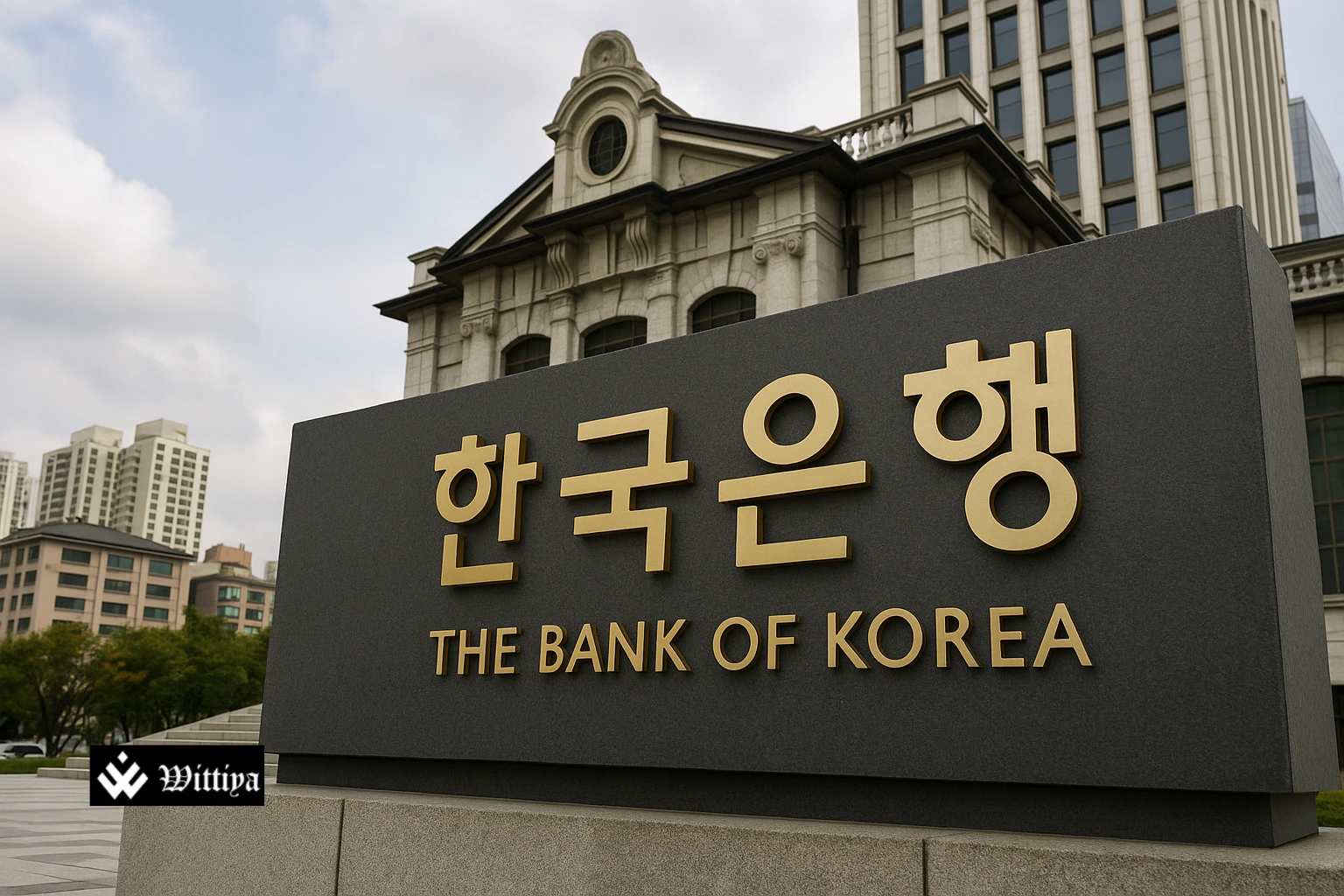
The Bank of Korea, headquartered in Seoul, South Korea, held its key policy rate at 2.5% as it evaluates the impact of recent government interventions targeting an overheated housing market. Despite economic contraction and international tariff threats, the central bank emphasized financial stability over aggressive monetary easing. The decision reflects growing concerns over soaring household debt and the capital misallocation caused by Korea’s unique rental system, “jeonse.”
The Bank of Korea, South Korea’s central monetary authority, kept its benchmark interest rate unchanged at 2.5% on July 11, as it monitors the effects of recent regulatory moves aimed at curbing housing price inflation and mounting household debt in the capital city of Seoul.
According to the central bank, Seoul witnessed a dramatic 19% year-on-year increase in housing prices in June, based on data from Goldman Sachs. This rapid escalation has prompted South Korean financial regulators to roll out new restrictions on mortgage lending in an effort to cool the market and prevent wider economic imbalances.
The central bank’s decision follows a rate cut in May when the country was grappling with both domestic political uncertainties and looming U.S. tariff threats on steel and auto exports. Despite a 0.2% contraction in South Korea’s GDP in Q1 of 2025, the bank chose stability over stimulus, citing a need to rein in household debt and housing-related financial risks.
“Financial stability is a core mandate for the Bank of Korea,” Governor Rhee Chang Yong stated, emphasizing that the bank is prioritizing macroeconomic balance over short-term growth pressures. According to the BOK, the housing market and its surrounding regions, which were showing signs of overheating, are now showing preliminary signs of stabilization due to recent policy actions.
The unique jeonse system in South Korea — a rental model where tenants pay large lump-sum deposits instead of monthly rent — has contributed to excessive borrowing, further complicating the debt landscape. This system, while offering benefits to landlords, has burdened households with large loans, often leading to a misallocation of capital away from productive sectors.
In May alone, household loans surged by 6 trillion won (approximately USD 4.27 billion), with estimates for June touching 7 trillion won. This spike in debt is seen as a major risk factor by the central bank.
Although the BOK held back from making another rate cut, market analysts expect reductions in upcoming policy meetings in August and November, depending on the effectiveness of current macroprudential policies and inflation trends.
Meanwhile, South Korea faces additional economic pressure as U.S. President Donald Trump has threatened to impose 25% tariffs on all South Korean imports by August 1, should a bilateral trade agreement not be reached. This looming trade action adds further complexity to South Korea’s monetary and fiscal policy planning.
The country’s financial markets responded moderately to the rate decision. The KOSPI index rose 0.74%, and the won strengthened slightly to 1,372.48 per U.S. dollar.
As the Bank of Korea continues to assess the unfolding economic risks, all eyes remain on Seoul’s real estate market and the central bank’s future moves to balance debt, inflation, and growth.