


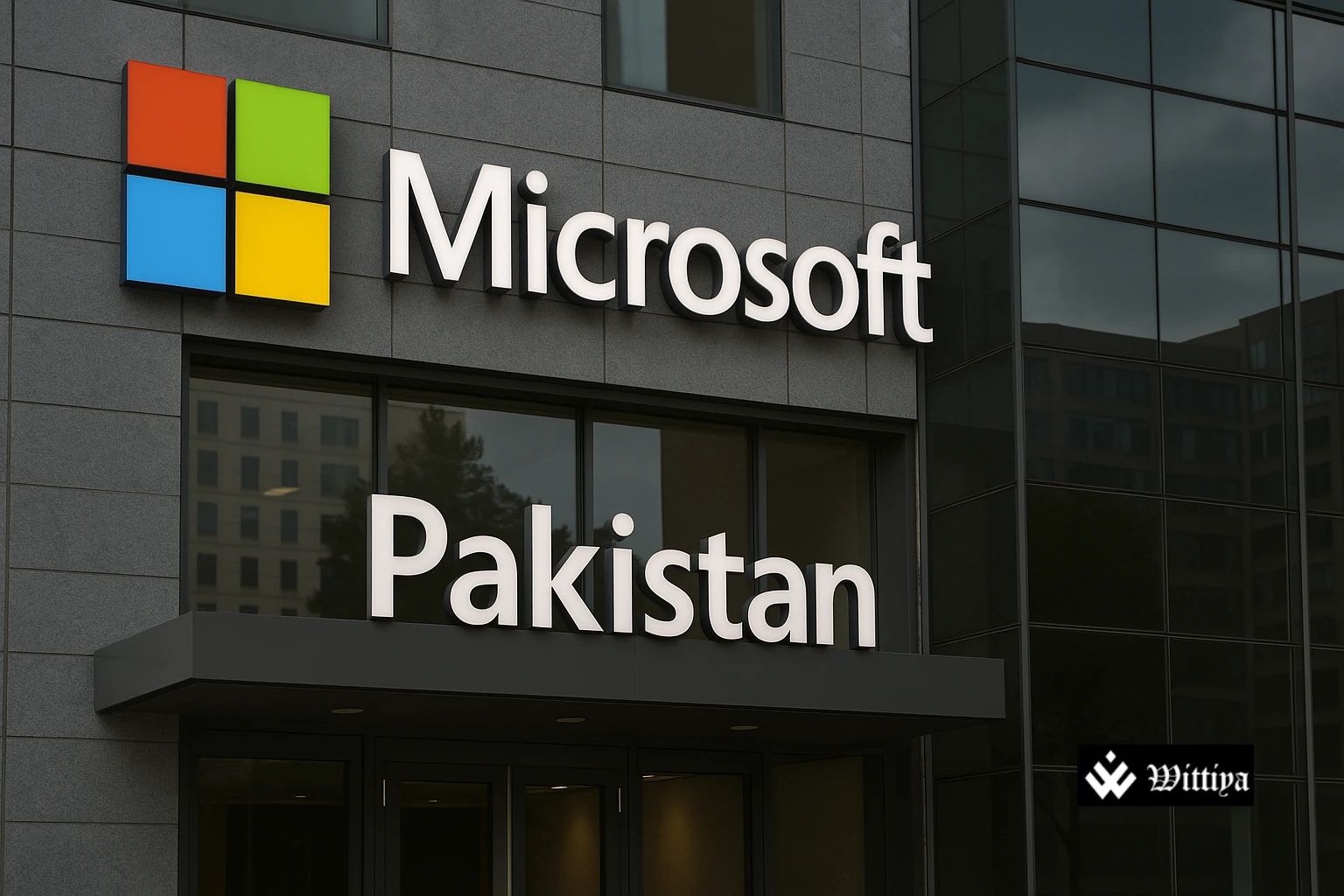
Microsoft Corporation, the global tech giant headquartered in Redmond, Washington, has officially exited Pakistan after 25 years of operations. The exit, confirmed on July 5, was described by Microsoft Pakistan’s founding head Jawwad Rehman as “more than a corporate exit,” pointing to the country’s challenging economic and policy environment. Former Pakistan President Arif Alvi also expressed concern, revealing that Microsoft had once planned to expand its operations in Pakistan but shifted focus to Vietnam due to political instability.
In a move that sent ripples across the technology and business sectors, Microsoft Corporation officially exited Pakistan, ending its operations after a 25-year presence in the country.
The development was confirmed by Jawwad Rehman, the founding head of Microsoft Pakistan, who launched the company’s local operations in June 2000. Rehman expressed disappointment over the closure, calling it “more than a corporate exit” and a reflection of the difficult business environment global firms face in the country.
This is more than a corporate exit. It’s a sobering signal of the environment our country has created—one where even global giants like Microsoft find it unsustainable to stay.”
Jawwad Rehman, Founding Head of Microsoft Pakistan
He added that the last few employees were recently informed, marking the end of a historic chapter.
Microsoft stated that the closure is part of its global restructuring and a shift toward a cloud-based, partner-led model. The tech giant is also undergoing its largest layoff round since 2023, cutting about 9,100 jobs worldwide, or 4% of its workforce.
Rehman reflected on the impactful initiatives led by Microsoft Pakistan, such as facilitating Bill Gates’ communication with former President Pervez Musharraf and helping secure Gates Foundation funding for health initiatives.
In a separate message, Rehman urged Pakistan’s Ministry of IT to engage tech firms with bold KPI-driven policies, stating that future progress depends on strategic engagement with global companies.
Arif Alvi, the former President of Pakistan, also responded to the news, calling it a troubling sign of the country’s worsening economic state. Recalling Bill Gates’ visit to his office in 2022, Alvi revealed that Microsoft had plans to expand operations in Pakistan and a major investment announcement was being prepared.
“Everything went downhill after that,” Alvi noted, referring to the political instability and arrest of former PM Imran Khan, which led Microsoft to shift its focus to Vietnam instead of Pakistan.
“Pakistan now spirals in a whirlpool of uncertainty. There is increasing joblessness, our talent is migrating abroad, purchasing power has reduced, economic recovery feels like a distant dream,” Alvi wrote.
Microsoft’s exit signals more than a missed investment opportunity—it underlines the need for structural reforms to foster a stable, tech-friendly environment in Pakistan. As the country struggles with political and economic challenges, the departure of one of the world’s leading tech companies marks a turning point in its digital future.